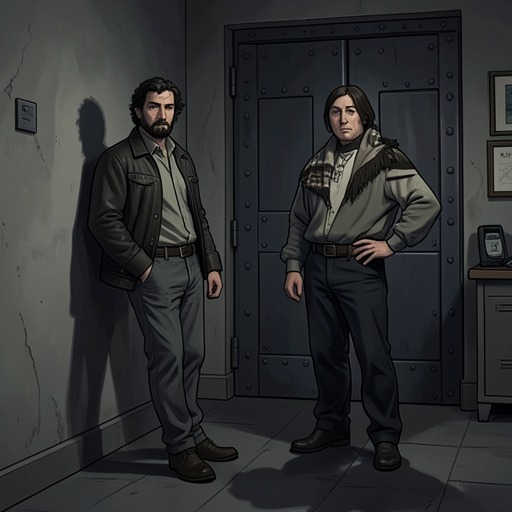
Friendship between William Hale and Henry Roan
Killers of the Flower MoonWilliam K. Hale and Henry Roan were presented as close friends, but their relationship also joined personal trust to financial dependence. Roan repeatedly turned to Hale for money, and Hale was named beneficiary of Roan’s $25,000 life-insurance policy. After Roan’s murder, the friendship and the policy became clues in Tom White’s inquiry into whether Hale had turned a trusted bond into a route to wealth; they raised suspicion but did not prove Hale’s responsibility for the killing.
Friendship and Financial Dependence
Roan, an Osage man whose financial allowance had been curtailed, often asked Hale for cash. Hale later described himself as a friend who had repeatedly lent Roan money when he was in trouble. According to Hale, Roan had named him beneficiary of the $25,000 policy because of those loans. The account thus gave the arrangement an appearance of reciprocal loyalty: Roan received help, while Hale’s place as beneficiary was explained as repayment or recognition of that assistance.
That explanation acquired a darker significance after Roan’s death. The size of the policy and Hale’s position as its beneficiary connected their friendship to a substantial financial interest. The evidence establishes the relationship and the policy, not that the loans were fabricated or that the friendship itself was only a disguise. The tension between Hale’s account of repeated aid and the benefit he stood to receive became part of the case against him.
Roan’s Distress and Disappearance
A couple of weeks before his death, Roan telephoned Hale in distress after learning that his wife was having an affair with Roy Bunch. Hale went to see him and tried to console him. Their contact continued in downtown Fairfax, where Roan asked to borrow a few dollars and, still troubled by his wife, said he wanted to get a drink of moon liquor.
Hale advised Roan not to buy whiskey, telling him it was hurting him and warning that Prohibition officers were going to get him. Roan replied that he would not bring liquor into town and would hide it out. The exchange shows Hale acting as confidant and adviser in a moment of personal vulnerability, while also establishing that Roan was in Fairfax shortly before he disappeared. Roan was next found dead in a car.
The Policy and the Murder Inquiry
When the lawmen identified Roan’s body, they notified Hale. The mayor of Fairfax recalled that Roan considered Hale his best friend; Hale’s own account of the loans and the insurance beneficiary designation reinforced the apparent closeness. The policy made Hale’s connection to the dead man immediate and concrete, but it did not by itself show who had killed him or whether Hale had ordered the murder.
Tom White later found that Hale had tried to purchase Roan’s mineral headright before obtaining the insurance policy. The law barred the sale of headrights, and White suspected that the failed effort had led Hale to pursue an insurance scheme instead. This was an investigative theory, not proof of the killing. White had circumstantial evidence connecting Hale to Roan’s death, but no fingerprints or credible eyewitnesses established that Hale had shot Roan or arranged for someone else to do so.
A Friendship Recast as a Possible Channel
The broader pattern White reconstructed made the Hale–Roan relationship look less isolated. Probate records showed headrights from successive deaths in Mollie Burkhart’s family accumulating in her hands; she was married to Hale’s nephew Ernest, whom an agent described as controlled by Hale. White concluded that Hale could reach the family’s assets indirectly through his nephew. In that larger suspected scheme, Roan’s policy offered a separate, direct financial connection between Hale and a victim.
The book therefore holds two facts in tension: Hale was remembered as Roan’s close friend and had helped him with money, yet he also stood to benefit from Roan’s life insurance and had tried to acquire Roan’s headright. The relationship gave Hale access and an explanation for his financial ties to Roan; after the murder, those same ties invited scrutiny. They sharpened suspicion without resolving the central question of who had caused Roan’s death.